.webp)
he boardroom approved the budget. The date is locked in. And then someone turns to you and says: so who is handling the planning?
Corporate event planning is not the same as booking a dinner reservation. It involves vendors, budgets, logistics, scheduling, and on-site execution all at once. One missed detail can affect your brand, your team, and your client relationships.
This guide breaks down exactly who plans corporate events, what they do, and how to find the right person for your needs. And if you are ready to skip the stress and hand it to professionals, Bilo Events in California is here for you.
Corporate event planning is the process of organizing and executing events on behalf of a business. These events are tied directly to company goals, whether that is building client relationships, motivating employees, launching a product, or strengthening a brand.
Unlike personal events, every detail of a corporate event needs to reflect the company's image and serve a specific business objective. A poorly run corporate event does not just disappoint guests. It can damage reputation, waste budget, and miss the outcomes it was designed to achieve.
Common examples include:

There is no single answer to this question because it depends on the size of your company, the type of event, your budget, and how often you hold events. Here are the main options businesses use.
A corporate event planner manages business events from start to finish. They develop the concept, source vendors, manage the budget, and oversee execution on the day.
They can work independently, as part of an agency, or in-house within large organizations. They bring the industry knowledge and vendor relationships that most internal teams do not have.
Event management companies are agencies that specialize in large-scale corporate events. They have full teams covering creative design, logistics, vendor management, and on-site coordination. They are best suited for major conferences, multi-day events, or high-stakes product launches where complexity is significant.
Larger corporations often have dedicated internal event teams who handle company events as part of their role. They know the company culture and brand guidelines better than any outside planner. In-house teams work well for regular recurring events but often bring in outside support for large or high-profile occasions.
Freelance event coordinators work on a project-by-project basis. They are a cost-effective option for smaller or one-time events. Vet them carefully by reviewing their portfolio, checking references, and confirming experience with events similar to yours in size and type.`
Corporate events come in many shapes and sizes. Each type serves a different business purpose and requires a different planning approach.
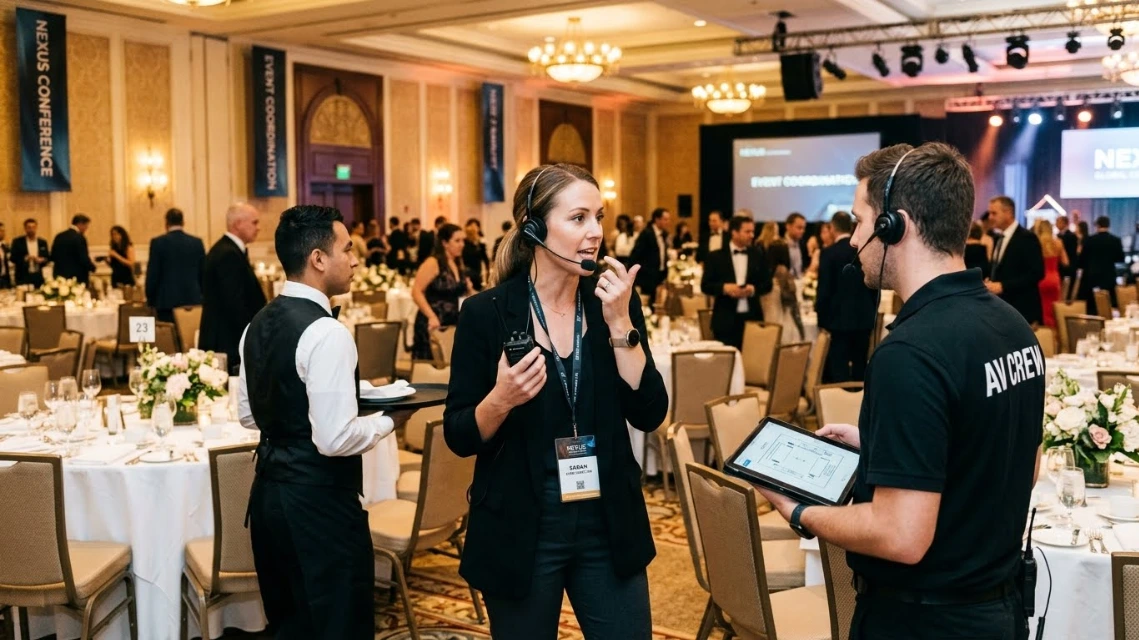
Conferences are among the most common corporate events. They range from small internal meetings to large industry summits with thousands of attendees. A corporate event planner handles everything from venue selection and speaker coordination to registration, AV setup, and attendee experience.
A product launch is one of the highest-stakes corporate events. Planners coordinate media invitations, venue design, demonstrations, catering, and post-event follow-up to make sure the launch lands the way it should.
Team-building events improve morale, strengthen relationships, and boost employee performance. A good planner tailors the experience to the company's culture and the specific goals of the event.
Trade shows require detailed logistics across booth design, staffing, scheduling, and lead capture. Specialist planners understand the unique demands of exhibition environments.
Award ceremonies and corporate galas require careful attention to atmosphere, timing, and guest experience. From seating arrangements and stage design to entertainment and catering, every element needs to feel polished and on-brand.
Company parties, whether summer celebrations or end-of-year holiday events, are important for employee morale and company culture. A corporate event planner helps create an experience that feels fun and genuine while still reflecting the company's values.
In-person workshops and virtual webinars both require careful coordination. Corporate planners handle registration, technology setup, speaker scheduling, and participant engagement to make sure the learning experience runs smoothly.
A corporate event planner manages every aspect of a business event from the first planning meeting to the final follow-up. Here is what their role typically covers:
Planning a corporate event is not a single task. It is a series of connected decisions. Here is how the process works from start to finish.
Every successful corporate event starts with a clear why. What does the company want to achieve? Is it lead generation, employee recognition, client retention, or brand visibility? Setting measurable goals at the start shapes every decision that follows, from venue choice to guest list to agenda structure.
The venue sets the tone for the entire event. Capacity, location, parking, accessibility, technical infrastructure, and overall atmosphere all matter. Corporate event planners have access to venue networks and can negotiate rates that companies often cannot get on their own.
A detailed event schedule, sometimes called a run of show, maps out every moment of the day from setup to teardown. It includes speaker times, meal breaks, transitions, entertainment, and any special activities. A good schedule keeps the event flowing and prevents dead time that causes guests to disengage.
Corporate events involve multiple vendors working simultaneously. Caterers, AV technicians, decorators, photographers, security teams, and transportation providers all need to be briefed, coordinated, and managed. A corporate event planner serves as the single point of contact for all vendor communication, reducing confusion and keeping everything aligned.
On the day of the event, the planner oversees setup, manages the schedule, handles vendor arrivals, troubleshoots problems, and makes real-time adjustments as needed. This is where experience matters most. A seasoned corporate event planner keeps things running smoothly even when unexpected challenges arise.
Some companies try to plan events in-house to save money. In reality, the time, stress, and hidden costs of doing it without professional help often cost more than hiring a planner from the start.
Not everyone who calls themselves a corporate event planner has the skills to deliver at a professional level. Here is what separates the best from the rest:
Organization and time management: Managing dozens of moving parts simultaneously requires exceptional organizational ability and the discipline to meet every deadline.
Communication and negotiation: Corporate event planners communicate with clients, vendors, venues, and internal stakeholders on a daily basis. Strong communication skills and the ability to negotiate favorable terms are essential.
Creativity and problem-solving: Every event needs creative thinking to stand out, and every event will face unexpected challenges. The best planners think creatively and solve problems quickly under pressure.
Attention to detail: In corporate event management, small details matter enormously. A missed confirmation email, a wrong dietary restriction, or a misspelled name on a seating chart can create unnecessary problems.
Ability to handle pressure: Corporate events are high-stakes environments. The ability to stay calm, focused, and effective when things do not go as planned is what separates experienced planners from inexperienced ones.
Planning a corporate event successfully is part science and part experience. These tips come from seasoned event professionals who have planned everything from small internal meetings to large multi-day conferences.
Start planning early. Large corporate events need at least three to six months of lead time. Venues book up, vendors get unavailable, and rushed planning leads to costly mistakes.
Focus on clear goals. Every decision from the venue to the agenda to the entertainment should serve the event's objectives. If something does not support the goal, it probably does not belong in the plan.
Keep the audience experience in mind. Your attendees are the most important element of any corporate event. Design the experience around their needs, comfort, and engagement from start to finish.
Use technology for registration and management. Event management software simplifies registration, attendee communication, check-in, and post-event feedback. It also gives you valuable data about your audience that helps improve future events.
Always include buffer time. Corporate event schedules almost always run differently than planned. Build buffer time between sessions and transitions so small delays do not turn into bigger problems.
Even companies that plan carefully can fall into these traps. Knowing them in advance is the best way to make sure they do not happen to you.
Poor budgeting
Underestimating costs is one of the most common mistakes in corporate event planning. Always build a contingency fund of ten to fifteen percent into your budget. Hidden costs like service charges, overtime fees, and last-minute additions add up quickly.
Lack of clear objectives
An event without clear goals is an event without direction. Every major decision becomes harder to make when you do not know what success looks like. Define your objectives before planning begins and measure your results against them afterward.
Ignoring guest experience
Long registration lines, uncomfortable seating, unclear schedules, and poor catering all affect how attendees feel about the event and the company behind it. Guest experience should be a top priority from the very beginning.
Overloading the schedule
Packing too many sessions, speakers, or activities into a single day is a common mistake. Attendees need time to network, process information, and recharge. A well-paced event is more effective than an exhausting one.
Weak communication with vendors
Vendors who do not have clear and up-to-date information will make mistakes. Confirm every detail in writing, send updated timelines regularly, and have a single point of contact managing all vendor communication on the day.
Corporate event planning costs vary significantly depending on the size, complexity, and location of the event. Here is a general overview of how pricing typically works:
Flat fee: Many corporate event planners charge a flat project fee based on the scope of work. This can range from a few thousand dollars for a small event to tens of thousands for a large multi-day conference.
Percentage-based pricing: Some planners charge a percentage of the total event budget, typically between ten and twenty percent. This model aligns the planner's incentives with keeping costs in check.
Hourly rate: Freelance event coordinators sometimes charge by the hour, which can work well for smaller or shorter-term projects.
Additional costs: Remember that the planner's fee is separate from the actual event costs. Venue rental, catering, AV equipment, decor, and entertainment are all additional budget items.
Choosing the right corporate event planner is one of the most important decisions you will make for your event. Here is what to look for:
Check experience and past events. Ask for a portfolio of similar events they have planned. Experience with your specific type and size of event matters more than general planning experience.
Look at client reviews and testimonials. What do past clients say about working with them? Look for consistent feedback about professionalism, communication, problem-solving, and results.
Ask about services offered. Make sure their offering matches what you need. Some planners handle full event management while others focus only on day-of coordination or specific event types.
Ensure clear communication. Your planner needs to communicate clearly, respond promptly, and keep you informed throughout the entire process. Poor communication before the event is a warning sign for what will happen during it.
Compare pricing and packages. Get detailed proposals from at least two or three planners before deciding. Look beyond the headline price and compare exactly what is included in each package.
Planning a corporate event takes time, expertise, and the right connections. At Bilo Events in California, our experienced corporate event planners handle every detail from start to finish so you can focus on your business. From conferences and product launches to team-building events and award ceremonies, we bring your vision to life with precision and care. Contact our team today and let Bilo Events plan your next corporate event
Corporate events are powerful tools for business growth, employee engagement, and brand building. But they only deliver results when they are planned and executed with expertise and intention.
Whether you choose a full-service event management company, an experienced freelance coordinator, or an in-house team with outside support, the key is finding someone who understands your goals, communicates clearly, and has the skills to bring your vision to life.
The right corporate event planner does not just organize an event. They create an experience that your attendees remember, your team is proud of, and your business benefits from long after the day is over.
What is the difference between a corporate event planner and an event coordinator?
A planner manages the full scope from concept and budget to vendor selection and execution. A coordinator focuses on logistical support and day-of tasks rather than overall strategy.
How early should I start planning a corporate event?
Large events need three to six months of lead time. Smaller events need four to eight weeks minimum. The earlier you start, the more options you have.
Can a corporate event planner work within a tight budget?
Yes. Experienced planners know where to prioritize spending and where to find cost-effective alternatives. Be transparent about your budget from the start.
What types of corporate events does Bilo Events plan?
Bilo Events in California plans conferences, product launches, team-building events, award ceremonies, trade shows, corporate parties, and workshops. Contact us today to get started.
How do I know if I need a corporate event planner or can plan the event in-house?
If your event is large, complex, or client-facing, hire a professional. For smaller internal events, an in-house team may be enough. When in doubt, a quick consultation with Bilo Events will clarify exactly what you need.


