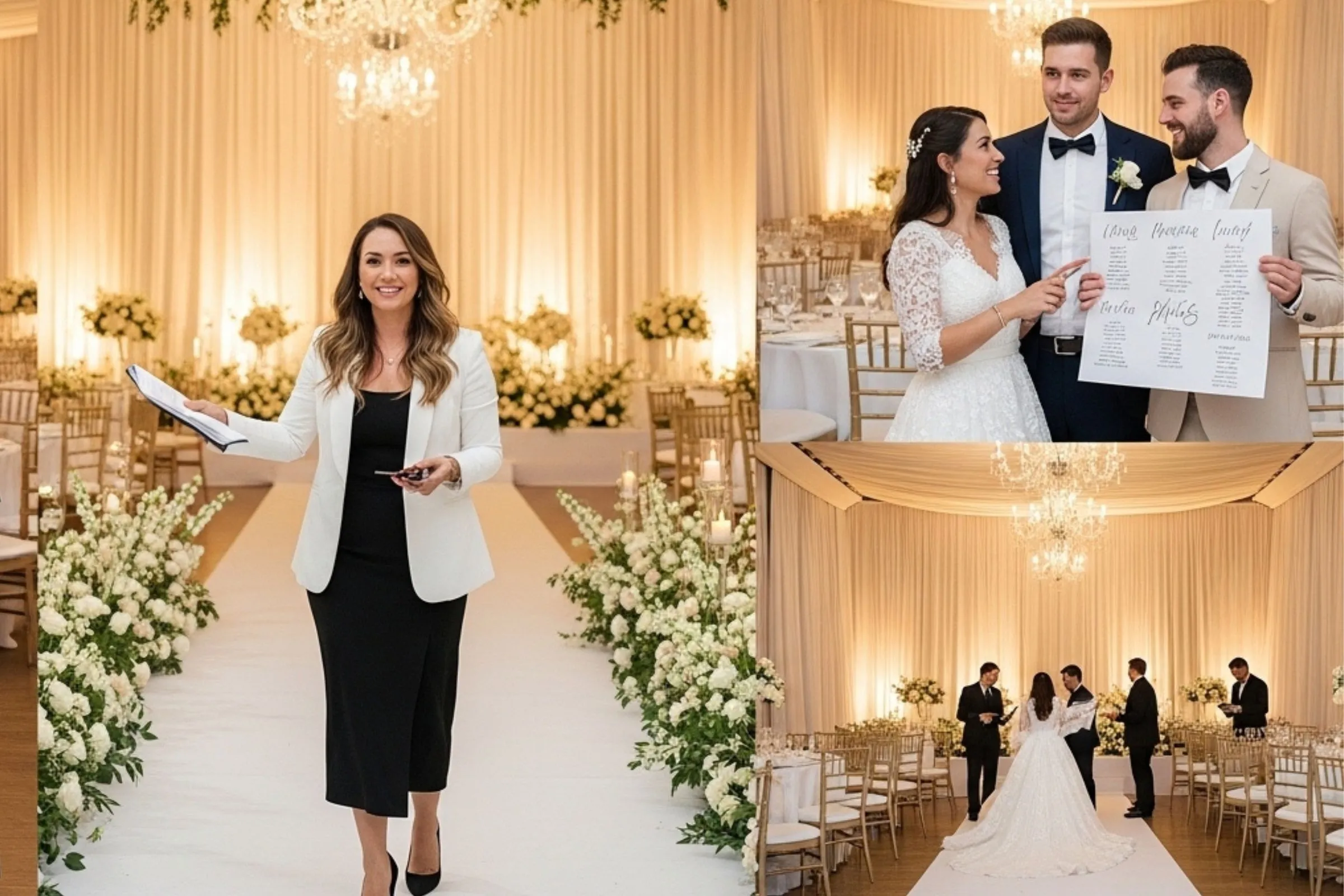
magine your wedding day. Everything looks exactly the way you pictured. The flowers are perfect. The timing is seamless. The vendors all show up on time and know exactly what they are doing. And you, instead of running around fixing problems, are simply enjoying one of the best days of your life. That does not happen by accident. It happens because someone spent months making sure every single detail was planned, confirmed, and ready.
That someone is a wedding planner. Here is everything they actually do. Ready to make your wedding day truly unforgettable? Contact Bilo Events in Fullerton, CA now and let an experienced wedding planning team bring your vision to life.
A wedding planner is a professional who helps couples plan, organise, and execute their wedding from start to finish. They manage the logistics, coordinate vendors, and make sure every element of the day comes together exactly as the couple envisioned.
Wedding planners work closely with the couple to understand their vision and preferences. They then coordinate all the details needed to bring the wedding together, from choosing a venue to managing vendors and schedules.
Most couples hire a wedding planner because wedding planning is far more complex than it looks. Hundreds of decisions, dozens of vendors, and a timeline that spans months adds up quickly.
The main duties of a wedding planner involve organizing, coordinating, and managing all aspects of a wedding. They work closely with the couple to understand their vision and turn it into a well-planned event.
Before anything is planned a wedding planner takes time to truly understand what the couple wants, not just the practical details but the feeling they want the day to create. This vision shapes every decision that follows and ensures the day feels like a genuine reflection of the couple rather than a generic event.
A wedding planner helps create a realistic plan for spending and makes sure every decision stays within it. They track costs, identify where value can be found without sacrificing quality, and ensure there are no unpleasant surprises as the wedding date approaches.
The venue sets the date, defines the atmosphere, and shapes every other decision that follows. A wedding planner researches options that fit the couple's vision and guest list, arranges viewings, reviews contracts, and helps the couple make a confident and informed choice.
A wedding planner brings an existing network of trusted suppliers saving enormous amounts of time and reducing the risk of disappointing results. They negotiate contracts, coordinate communication, and make sure every vendor is briefed, prepared, and working to the same timeline.
A wedding planner translates the couple's vision into a coherent visual theme covering colour palette, florals, lighting, table settings, and styling details that tie the whole day together and create a consistent and intentional atmosphere.
A wedding planner compiles and organises the guest list, manages RSVPs, coordinates dietary requirements, handles seating logistics, and ensures all guests receive the information they need well in advance.
A detailed timeline is one of the most valuable things a wedding planner produces. It covers every moment of the day with precise timings for every vendor and transition, preventing the day from running behind and giving everyone involved a clear shared understanding of how the day will unfold.
The months leading up to a wedding are where most of the real work happens. A wedding planner is deeply involved at every stage making sure everything is in place long before the big day arrives.
Before any vendor is booked a wedding planner reviews contracts carefully checking payment terms, cancellation policies, and anything that could cause problems later. This protection can save significant time and stress if something goes wrong.
The planner works with florists, stylists, and lighting designers to ensure every design element is on track reviewing mock-ups, attending styling visits, and making sure the couple's visual vision is being delivered exactly as discussed.
Many weddings involve more than just the ceremony and reception. A wedding planner coordinates welcome dinners, rehearsal dinners, and post-wedding brunches to ensure the entire wedding weekend runs smoothly and feels special for everyone involved.
The wedding day is where everything the planner has worked toward comes together. Their job on the day is simple: make sure everything runs perfectly so the couple does not have to think about a single thing except enjoying themselves.
A wedding planner arrives early and stays until the end overseeing vendor arrivals, setup, room transitions, and guest management. The couple should not have to think about a single detail on their wedding day. That is entirely the planner's responsibility.
The planner is the central point of contact for every vendor on the day confirming arrivals, managing timings, and making sure every supplier is in the right place at the right time doing exactly what was agreed.
No wedding day goes exactly to plan. A vendor runs late. Something does not arrive. A wedding planner handles every unexpected situation calmly and professionally solving problems before the couple even knows they existed.
From the processional to the first dance to the final send-off a wedding planner ensures every moment transitions seamlessly. They keep the day on schedule without it ever feeling rushed and make sure the couple and their guests are relaxed and fully present throughout.
These three roles are often confused but they are distinctly different and understanding the difference helps couples choose the right level of support.
A wedding planner is involved from the very beginning managing every aspect of planning from the first decision to the last detail. Venue, vendors, design, logistics, and day-of coordination. They are the most comprehensive and involved of the three roles.
A wedding coordinator comes on board in the final weeks before the wedding. They take over the existing plan, confirm vendor arrangements, and manage the day itself. They do not build the plan, they execute it.
A wedding designer focuses exclusively on the aesthetic, the look, feel, and visual experience of the wedding. They work with florists, lighting designers, and stylists to create a cohesive atmosphere. They do not manage logistics or vendors. Their role is purely creative.
A great wedding planner is not just organised, they bring a specific set of skills that make the difference between a good wedding and an unforgettable one.
Wedding planning involves managing dozens of moving parts across a timeline that spans many months. Strong organisational skills and the ability to juggle multiple priorities without missing a single detail are absolutely essential.
A wedding planner communicates constantly with couples, vendors, venues, and families. Clear professional communication prevents misunderstandings and strong negotiation skills ensure the couple gets the best possible results from every supplier.
Things go wrong in wedding planning. The best planners are not defined by whether problems arise, they are defined by how quickly and calmly they resolve them.
A planner needs to understand the couple's vision and translate it into beautiful real-world decisions while never losing sight of the smallest details that make a wedding feel truly special and personal.
The honest answer is as early as possible. But there are certain situations where professional support is not just helpful, it is essential.
The earlier you hire a wedding planner the more value you get. A planner brought in from the start helps shortlist venues, build vendor relationships, and create a solid foundation before the pressure of planning begins.
A destination wedding without professional support is an enormous risk. Legal requirements, unfamiliar vendors, and coordinating guests travelling from different places all require expertise and local knowledge that most couples simply do not have.
The larger and more complex the wedding the more essential a planner becomes. Multi-day events, large guest lists, and elaborate design concepts all require a level of coordination that is very difficult to manage without professional support.
Hiring a wedding planner is an investment and for most couples it is one of the best decisions they make in the entire planning process.
You deserve a wedding day that feels exactly the way you always imagined joyful, seamless, and completely stress-free. Contact Bilo Events in California today to get expert guidance. The right wedding planner makes that possible.
Whether you are just getting started or already feeling overwhelmed by the planning process, reach out to a professional wedding planner today. They will handle every detail with care, creativity, and expertise so you can focus on what truly matters, enjoying every moment of your wedding day.
A wedding planner does far more than organise a schedule. They bring expertise, creativity, and calm to one of the most important and complex events of a couple's life from the very first planning conversation to the final moment of the night.
Whether you are planning an intimate gathering or a large celebration, having the right professional by your side makes the entire experience better. Less stressful, more enjoyable, and exactly the way you always imagined it would be. Your wedding day only happens once. A great wedding planner makes sure it is everything it should be.
What does a wedding planner do?
They manage every aspect of the wedding venue, vendors, design, logistics, and day-of coordination so the day runs smoothly and reflects the couple's vision perfectly.
When should I hire a wedding planner?
As early as possible. The earlier a planner is involved the more value they bring and the more options you have.
What is the difference between a planner and a coordinator?
A planner is involved from the very beginning. A coordinator comes on board in the final weeks to manage the existing plan and oversee the day itself.
What is the difference between a planner and a designer?
A planner manages the entire process logistics, vendors, and timeline. A designer focuses purely on the visual and aesthetic experience of the day.
Do I really need a wedding planner?
If you want to enjoy your engagement and have a day that runs seamlessly, yes. A wedding planner saves time, reduces stress, and makes sure every detail is handled properly.


